What's the Difference Between Rodent Exclusion and Mice Baiting?
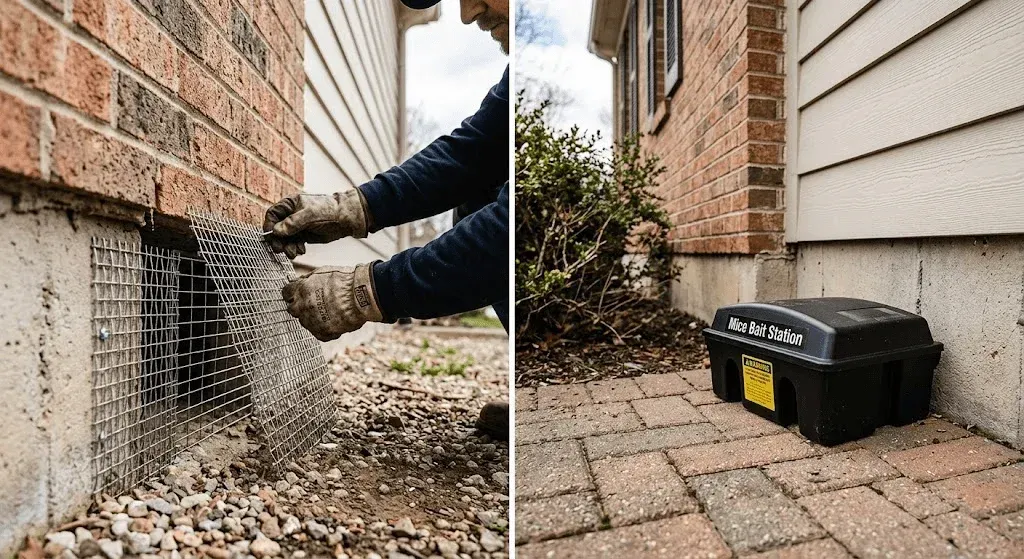
Table of Contents
- Introduction
- Understanding Rodent Exclusion
- Understanding Mice Baiting
- How Exclusion and Baiting Work Differently
- Advantages of Rodent Exclusion
- Advantages of Mice Baiting
- Why Both Methods Work Better Together
- How to Choose the Right Strategy
- Conclusion
- Frequently Asked Questions
Key Takeaways
- Rodent exclusion prevents mice from entering your home by sealing entry points and eliminating pathways, while mice baiting eliminates existing populations through poison or traps.
- Exclusion is preventative and long-term but requires identifying all entry points and addressing structural vulnerabilities. Baiting is reactive but works quickly on current infestations.
- Most effective rodent control combines both methods: baiting eliminates current populations while exclusion prevents future invasions.
- Exclusion alone fails when mice are already inside. Baiting alone fails when new mice continually enter through unsealed gaps.
- Professional assessment determines which approach or combination suits your specific situation, property condition, and infestation severity.
Introduction
Rodent exclusion prevents mice from entering your home by sealing entry points and removing access routes, while mice baiting eliminates populations already present through poison, traps, or other lethal methods. The distinction matters because they serve different purposes - one stops future invasions, the other eliminates current ones. Understanding mice control methods helps you decide whether exclusion, baiting, or both are necessary for your situation. Learn more about rodent exclusion options available for your home.
Most homeowners think about control only when they see mice. This reactive approach leads to incomplete solutions. The most effective rodent management combines both strategies: baiting eliminates the immediate problem while exclusion prevents it from happening again.
This guide explains how each method works, what each accomplishes, their practical limitations, why combining them produces better results, and how to assess which approach fits your situation.
Understanding Rodent Exclusion
Rodent exclusion means making your home physically impenetrable to mice by sealing every possible entry point. Mice squeeze through gaps as small as a dime, climb exterior walls, and navigate complex paths to reach openings.
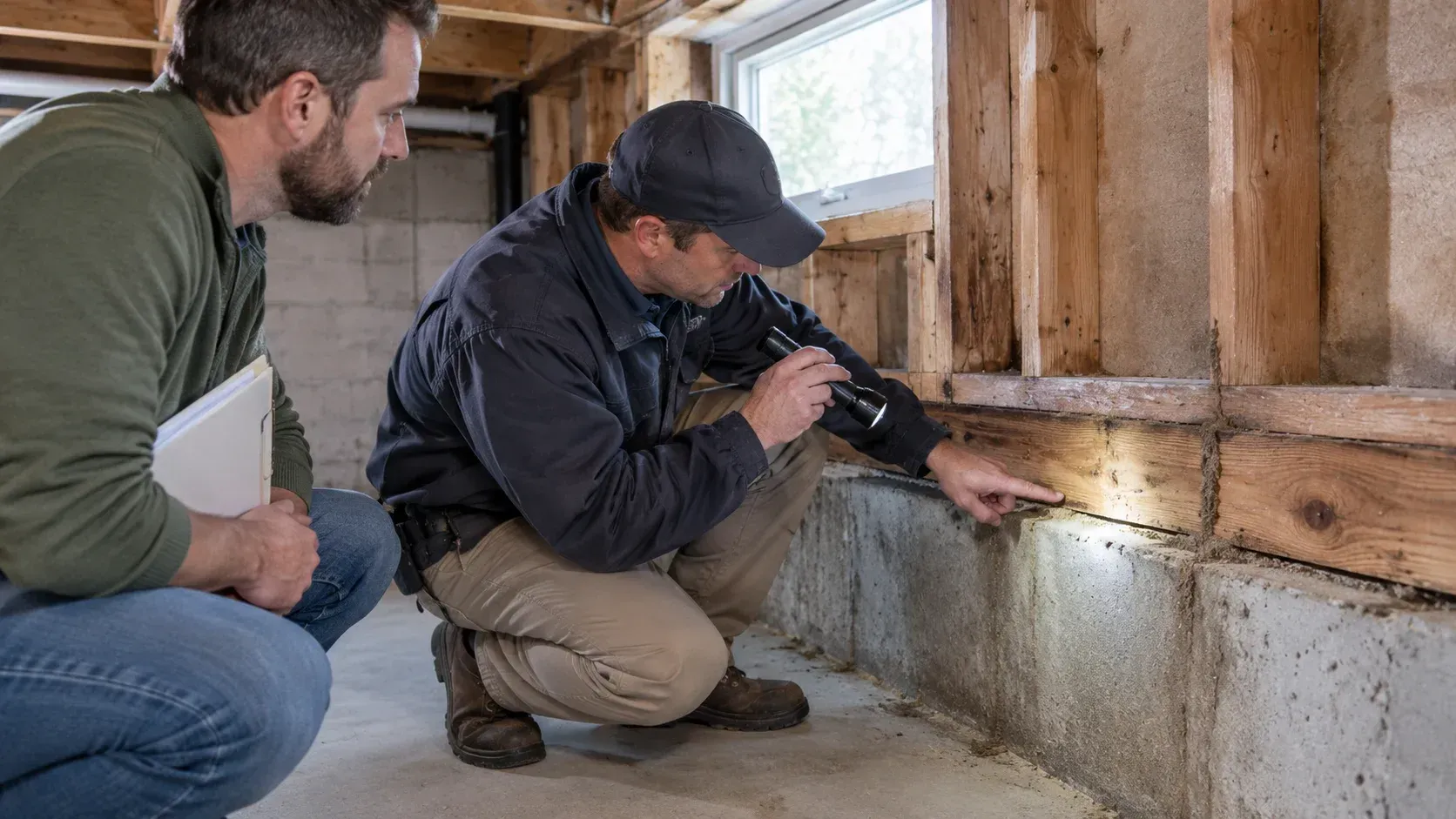
Effective exclusion requires systematic inspection to locate entries: foundation cracks, gaps around pipes and wires, spaces under doors, missing mortar in brick, openings in siding, and deteriorated weatherstripping. Once identified, gaps are sealed using caulk, steel mesh, hardware cloth, or foam sealant. Door sweeps and weatherstripping seal gaps beneath doors.
Exclusion is preventative and stops mice from entering initially. However, it doesn't eliminate mice already inside. If your home currently has an infestation, exclusion won't address the existing population.
Understanding Mice Baiting
Mice baiting involves placing poison, traps, or other lethal methods to eliminate mice present in your home. Common approaches include snap traps, electronic traps, poison bait stations, and glue traps, with poison and snap traps remaining most effective.
Baiting works by placing lethal mechanisms where mice travel. Bait stations are located along walls, in areas showing activity, and in hidden spaces like attics. Effective baiting requires understanding mouse behavior - they follow established pathways and avoid unfamiliar objects initially. Multiple stations work better than single ones since mice explore different routes.
Baiting addresses existing populations quickly, eliminating most mice within days or weeks. However, it prevents nothing about new mice entering through unsealed entry points. Without exclusion, new mice continuously replace those caught, creating endless reinfestation cycles.
How Exclusion and Baiting Work Differently
Exclusion operates on prevention - stopping mice before they arrive. It addresses the source of the problem by eliminating access. Once properly implemented, exclusion provides ongoing protection without additional effort or cost beyond the initial installation.
Baiting operates on elimination - killing mice after they've arrived. It addresses the symptom (existing mice) rather than the source (entry points). Baiting must be repeated indefinitely unless exclusion prevents new mice from entering to replace those eliminated.
Think of it this way: exclusion is like fixing a leak before water damages your home. Baiting is like mopping up water after the leak occurs. You can keep mopping indefinitely, but eventually you must fix the leak.
This difference explains why combining both methods is necessary. Baiting alone creates an endless cycle of treatment and reinfestation. Exclusion alone accomplishes nothing if mice are already inside. Together, they eliminate current problems while preventing future ones.
Advantages of Rodent Exclusion
Long-term solution. Once completed, exclusion provides ongoing protection without additional treatment or maintenance. Seal entry points once, and mice stay out indefinitely.
Cost-effective over time. Initial exclusion costs money for materials and labor, but eliminates ongoing costs of repeated baiting and professional treatments. Over years, exclusion saves substantial expense.
Prevents property damage. Exclusion prevents mice damage to insulation, wiring, and structural materials rather than allowing damage while baiting handles visible mice.
Addresses root cause. Exclusion eliminates the reason mice entered - access to shelter - rather than treating symptoms.
No toxins needed. Exclusion avoids poisons or chemicals, important in homes with children or pets.
Advantages of Mice Baiting
Immediate results. Baiting eliminates existing mice quickly, reducing visible activity within days and providing immediate relief.
No structural work required. Baiting doesn't demand finding and sealing entry points. It works on current populations regardless of how they entered.
Works in complex buildings. Some properties have so many entry points that complete exclusion is impractical. Baiting provides control in these situations.
Flexible timing. Baiting can begin immediately without planning or contractor involvement, making it useful when quick action is needed.
Addresses existing damage. If mice are in walls or attics, baiting eliminates them before they cause additional damage.
Why Both Methods Work Better Together
The most effective rodent control combines baiting and exclusion. First, baiting eliminates current populations. Second, exclusion prevents future invasions. Professional pest control services can assess which sequence works best for your situation.
Starting with baiting makes sense for active infestations, providing quick relief while exclusion is being planned. Eliminating current populations allows contractors to work more safely when exclusion work begins.
After baiting reduces the population, exclusion work begins. With fewer mice inside, contractors work more effectively. Once exclusion is complete, any remaining mice have no way to reach outside, making them easier to eliminate.
This combined approach addresses both the immediate problem (existing mice) and the root cause (access points), which is more effective than either method alone.
How to Choose the Right Strategy
Assess your current situation. Do you see mice currently? Are you finding droppings or damage? Active infestation indicates baiting should start immediately. Absence of current activity but past problems suggests exclusion alone might prevent recurrence.
Evaluate property condition. Inspect for obvious entry points. If the building is in poor condition with numerous gaps and cracks, exclusion alone might be impractical initially. Combined approach makes more sense. Well-maintained homes with few obvious gaps might succeed with exclusion alone.
Consider timeline. If you need immediate results, baiting addresses current problems quickly. If you have time and want long-term solutions, exclusion work can take priority. Usually, you need both but may sequence them based on urgency.
Determine resources. Exclusion costs money upfront but saves costs over time. Baiting costs less initially but accumulates over years. Calculate whether you're willing to invest in exclusion now to avoid ongoing treatment costs later.
Get professional assessment. Professionals identify entry points you might miss and recommend appropriate sequencing. For commercial pest control or residential properties, professional evaluation ensures you're addressing the problem effectively and completely.
Conclusion
Rodent exclusion and mice baiting serve different purposes and work best together. Exclusion prevents future invasions by sealing entry points, while baiting eliminates current populations quickly. Using only one method leaves vulnerabilities - baiting fails without exclusion stopping new invasions, and exclusion fails if mice already inside remain undisturbed.
The most effective approach combines both methods: baiting eliminates the immediate problem while exclusion prevents recurrence. This addresses both symptoms and root causes.
Your specific situation determines the right approach. Current infestation with numerous entry points suggests starting with baiting while planning exclusion. A well-maintained home with occasional mice might succeed with exclusion alone. Professional assessment clarifies which strategy or combination fits your property and goals.
Understanding the difference between these methods helps you make informed decisions about rodent control rather than pursuing ineffective strategies or endless cycles of treatment.
Need Help Deciding Your Best Rodent Control Strategy?
If you're dealing with mice or concerned about preventing future infestations, understanding your options helps you make better decisions. Professional assessment can identify current problems, evaluate your property's vulnerabilities, and recommend whether exclusion, baiting, or both make sense for your situation. This clarity supports informed decisions about protecting your home from rodents. Ready to explore your options?
Contact us today to discuss your specific rodent control needs and get personalized recommendations.
Frequently Asked Questions
Should I use baiting or exclusion first if I have an active infestation?
Start with baiting to eliminate current populations quickly. While baiting is ongoing, plan and schedule exclusion work. This sequence addresses the immediate problem while preparing for long-term prevention. After exclusion is complete, any remaining mice have no entry routes.
Can I do rodent exclusion myself or do I need professionals?
You can seal some obvious entry points yourself, but professional inspection typically identifies gaps and vulnerabilities you'd miss. Professionals also use materials and techniques more effective than typical DIY approaches. Consider professional assessment even if you handle some sealing yourself.
How long does baiting take to eliminate a mouse population?
Effective baiting typically takes 1-3 weeks to eliminate most mice. However, larger infestations or bait-avoidant populations may require longer. Multiple placements, regular monitoring, and sometimes different bait types improve effectiveness.
After exclusion, will mice ever return?
Exclusion prevents mice entry, but it requires maintenance. Weatherstripping wears, caulk deteriorates, and new gaps develop over time. Occasional re-inspection and re-sealing maintain the exclusion barrier and prevent new entries.
What's the cost difference between baiting and exclusion?
Baiting costs less initially (typically a few hundred dollars) but repeats indefinitely. Exclusion costs more upfront (often $500-2000 depending on property condition and entry points) but eliminates ongoing treatment needs. Over years, exclusion proves more cost-effective.
Recent Posts