What's the Difference Between Carpenter Ants and Termites?
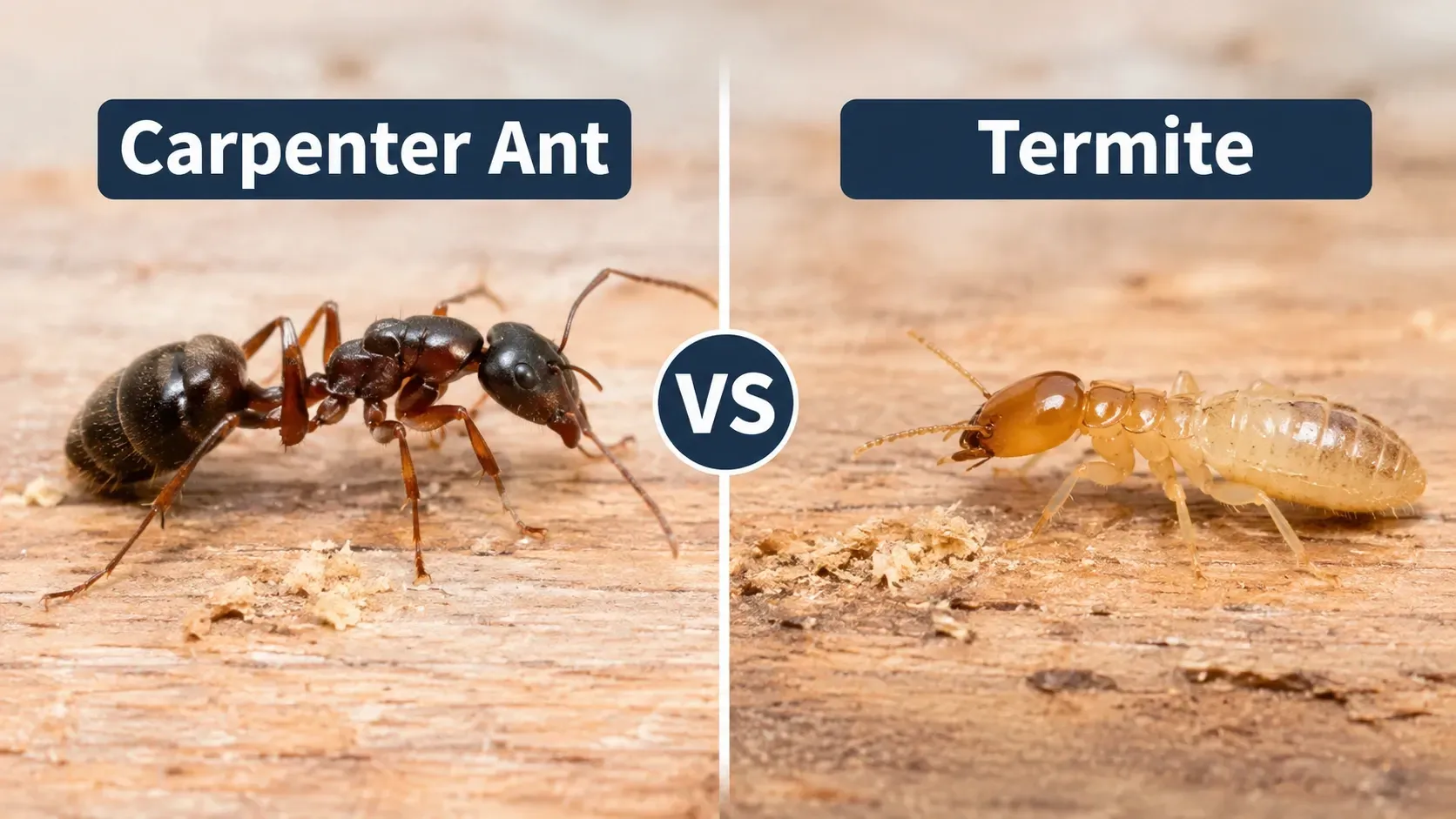
Table of Contents
- Introduction
- The Core Difference in One Paragraph
- How to Tell the Insects Apart
- Signs of Termite and Carpenter Ant Damage
- Where Each Pest Is Found in Michigan Buildings
- Why Swarmers Cause Confusion
- Why Correct Identification Changes the Response
- Common Misconceptions About Carpenter Ants vs Termites
- What Typical Online Advice Overlooks
- A Simple Checklist for Property Owners
- Conclusion
- Frequently Asked Questions
Key Takeaways
- Carpenter ants tunnel through wood to build nests but do not eat it. Termites eat wood, which is their food source.
- Carpenter ants have a narrow waist, elbowed antennae, and wings of unequal length. Termites have a broad waist, straight antennae, and wings of equal length.
- Carpenter ant galleries are smooth and clean with sawdust-like debris nearby. Termite damage often looks rough and layered, with mud or soil packed in the tunnels.
- Both pests are active in Michigan, and both are drawn to moisture, so damp wood is a place to check first.
- Because the two pests need different responses, a professional inspection is a sensible step when you are not sure which one you have.
Introduction
Carpenter ants and termites both damage wood, but they do it for different reasons: carpenter ants excavate wood to make nests and do not eat it, while termites eat wood as food. The difference matters because it changes what the damage looks like, how fast it can spread, and what kind of response makes sense. If you are unsure which pest you are dealing with, professional pest control can confirm it through an inspection.
For Michigan homeowners and business owners, the confusion is common. Both pests are active in the state, both can appear in spring, and both are often found near moisture. Treating the wrong pest wastes time while damage continues.
This guide explains how to tell carpenter ants and termites apart, what each type of damage looks like, and why correct identification matters before any treatment decision.
The Core Difference in One Paragraph
Carpenter ants are ants that nest in wood, often wood that is damp or already decayed, and they push out the wood they remove as debris. Termites are a different type of insect that feeds on cellulose in wood, so they consume the material as they tunnel. In practice, that means carpenter ants create hollow galleries to live in, while termites hollow out wood because they are eating it.
How to Tell the Insects Apart
Body Shape
A carpenter ant has three clear body segments with a narrow, pinched waist, a lot like other ants. A termite has a straighter, thicker body with no obvious waist. If the insect looks like it has an hourglass middle, you are likely looking at an ant.
Antennae
Carpenter ants have elbowed (bent) antennae. Termites have straight antennae that look slightly beaded. This is one of the easiest features to check with a close look or a photo.
Wings
Both pests produce winged reproductive insects, often called swarmers. Carpenter ant swarmers have two pairs of wings where the front pair is longer than the back pair. Termite swarmers have two pairs of wings of roughly equal length, and the wings often break off and are left behind in piles.
Color and Size
Carpenter ants are usually black or reddish-black, and workers are often among the larger ants found in a home. Termite workers are typically pale and soft-bodied, while swarmers are darker. Size alone is a poor guide, so the shape of the waist and antennae are more reliable.
Signs of Termite and Carpenter Ant Damage
What Carpenter Ant Damage Looks Like
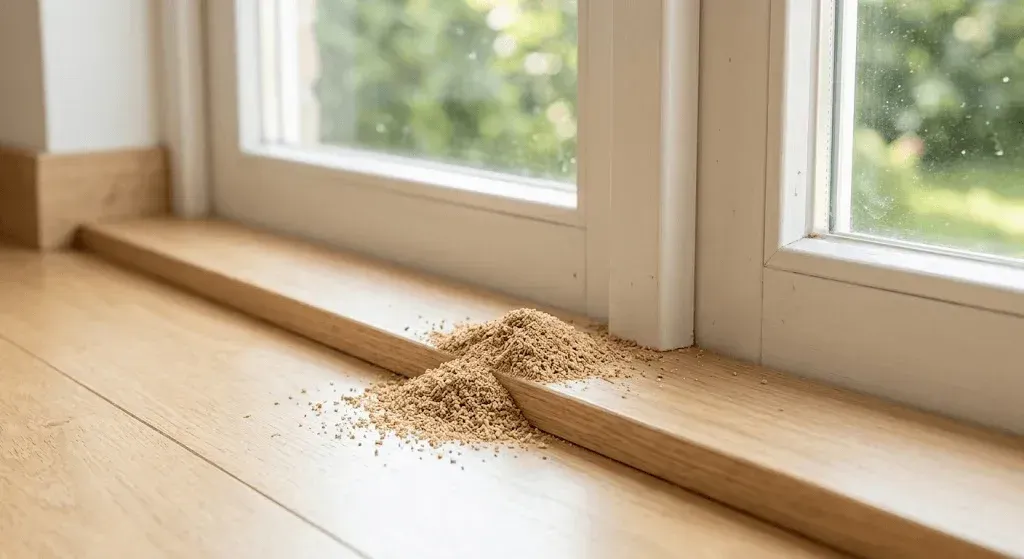
Carpenter ant galleries are smooth, clean tunnels that follow the grain of the wood. You may find small piles of coarse, sawdust-like debris called frass near walls, window frames, or baseboards. The debris can include bits of dead insects. Small, round openings may appear where ants push debris out. Some people also hear faint rustling inside walls when a colony is active.
What Termite Damage Looks Like
Eastern subterranean termites, the type found in Michigan, build mud tubes to travel between soil and wood. Their tunnels often look rough and layered, with soil or mud packed in them. Wood may sound hollow when tapped, and paint can bubble or buckle where termites are working behind the surface. Piles of discarded wings near windows or doors can be another sign.
Why the Debris Is a Useful Clue
Carpenter ants push debris out of their nest, so you often see it on the floor. Termites generally keep their tunnels packed and sealed, so a pile of sawdust is less typical of termites. Finding clean frass points toward carpenter ants, while finding mud tubes points toward termites.
Where Each Pest Is Found in Michigan Buildings
Carpenter Ants and Moisture
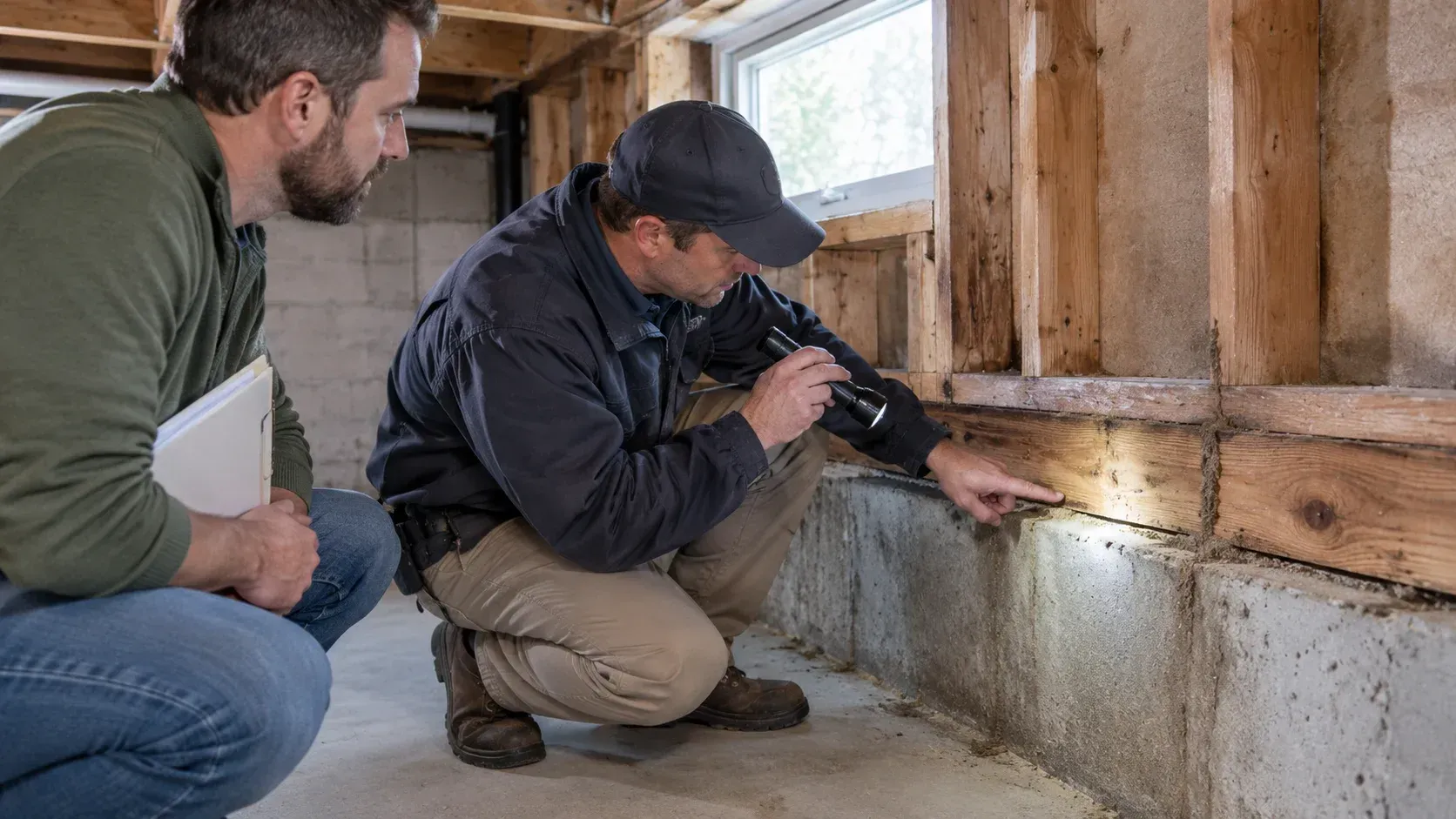
Carpenter ants often nest in wood softened by moisture, such as around leaking roofs, window frames, plumbing, or attic vents. They can also nest in hollow trees, stumps, and firewood near a building and travel indoors to forage.
Termites and the Ground
Termites live in soil and need regular access to it. Michigan's cold winters push colonies deeper below the frost line, and they return closer to the surface as the ground warms. In buildings, they are most often found around foundations, basements, crawl spaces, and wood that touches soil.
Residential and Commercial Properties
Both pests are found in houses, and owners of restaurants, retail spaces, and warehouses are also at risk. Wood-framed commercial buildings, loading areas with damp wood, and properties near landscaping all offer opportunities. Those weighing commercial pest control options may want to ask how wood-destroying insects are included in the inspection.
Why Swarmers Cause Confusion
Swarmers are the winged adults that leave a colony to start new ones. In spring, many people notice winged insects indoors and cannot tell whether they are flying ants or termites.
Seeing swarmers inside a building suggests a colony may be nearby, and sometimes inside. Saving one in a jar and checking the waist, antennae, and wing length can help, and a professional can usually identify a sample quickly.
Why Correct Identification Changes the Response
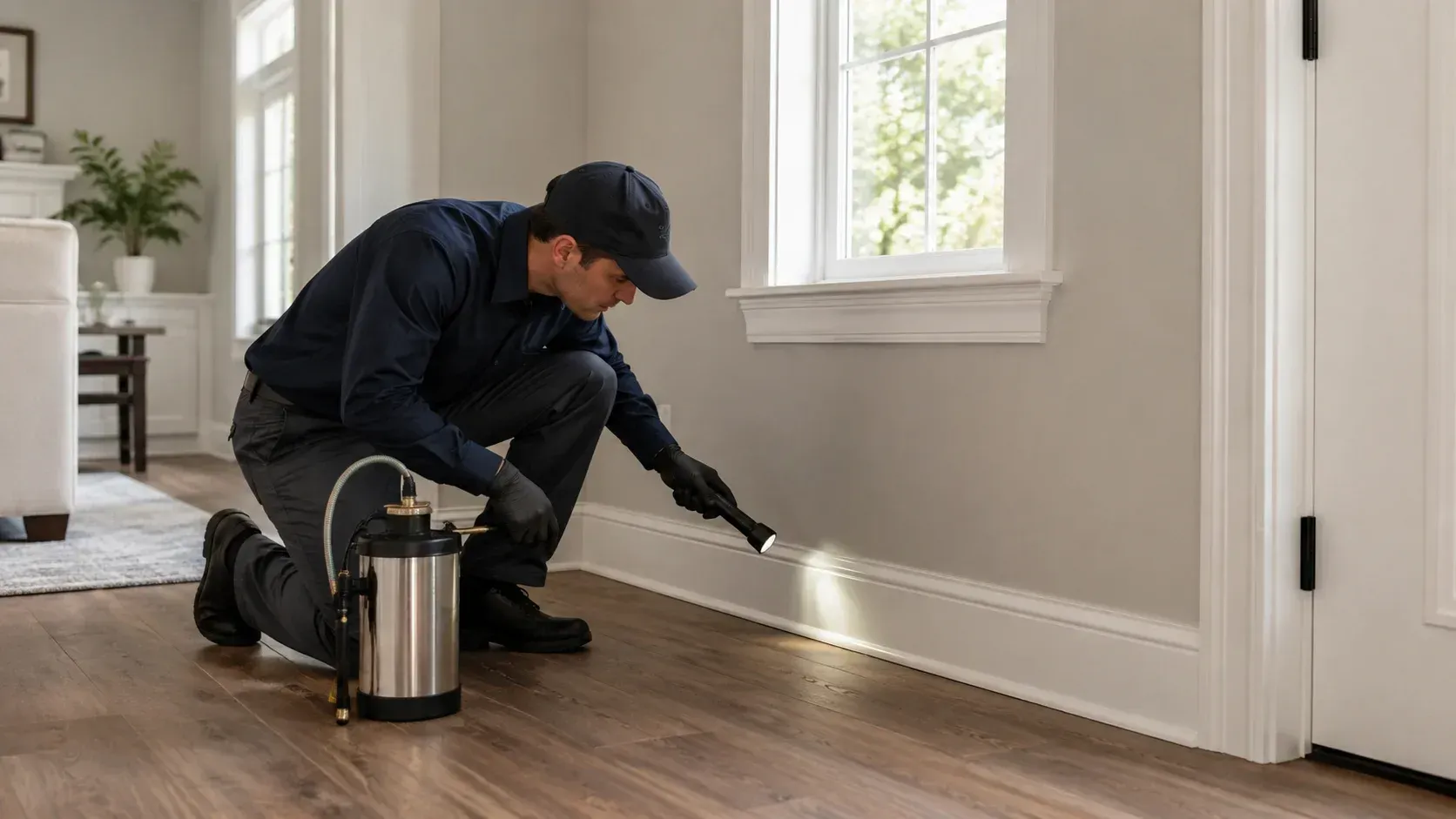
Carpenter ants and termites need different approaches. Carpenter ant control usually involves finding the nest and addressing the moisture that attracted them. Termite control often involves the soil around the structure, bait systems, or other methods suited to a ground-dwelling colony. The wrong approach can leave the real problem in place.
Termites feed on wood continuously, so unnoticed activity can lead to significant damage over time. Carpenter ant damage also grows with the colony and often points to a moisture problem that needs repair. Either way, early action is usually less disruptive than waiting.
Common Misconceptions About Carpenter Ants vs Termites
Misconception: Carpenter ants eat wood. They do not. They remove wood to make space for a nest and feed on other foods such as sweets and insects.
Misconception: Any winged insect in the house is a termite. Flying ants are common, and the waist, antennae, and wings are what separate them.
Misconception: Only old or rotting wood attracts these pests. Carpenter ants often prefer damp or damaged wood, but they can extend into sound wood. Termites can attack sound wood as well, especially where it contacts soil.
Misconception: A pile of sawdust always means termites. Termites usually leave mud, not clean sawdust. Clean frass more often points to carpenter ants.
What Typical Online Advice Overlooks
Many articles stop at a list of differences. In practice, a few points matter just as much.
First, both pests can be present in the same building. Moisture damage can bring carpenter ants into a structure where termites are already active, so finding one does not rule out the other.
Second, the visible sign is not always where the problem is. Carpenter ants can forage some distance from their nest, so seeing ants inside does not mean the nest is in the wall next to them. Termite damage can also be well hidden behind finished surfaces.
Third, the moisture source is part of the fix. Treating pests without repairing leaks, poor drainage, or wood-to-soil contact can allow the problem to return. This holds for homes as well, and residential pest control plans often combine treatment with recommendations for reducing moisture.
A Simple Checklist for Property Owners
What to Look For
- Smooth, clean galleries and small piles of coarse debris point toward carpenter ants.
- Mud tubes on foundations, or rough layered tunnels packed with soil, point toward termites.
- Winged insects: check waist shape, antennae, and wing length.
- Rustling in walls or damp, soft wood near leaks should be noted.
What to Do Next
Take clear photos, keep a sample of any insects or debris in a sealed container, and note where and when you saw activity. Avoid disturbing suspected tunnels before an inspection.
Conclusion
Carpenter ants and termites are often mistaken for each other because both damage wood and both may swarm in spring. The key difference is that carpenter ants nest in wood without eating it, while termites consume wood as food.
Body shape, antennae, wing length, and the type of debris or tunnels are the most useful clues. Michigan property owners should pay special attention to damp wood, foundations, and any place where wood meets soil.
Because the right response depends on which pest is present, accurate identification comes before treatment decisions. Photos, samples, and a clear record of what you saw make that step easier.
Not Sure Which Pest You Have in Michigan?
If you have found sawdust-like debris, mud tubes, or winged insects and are not certain what they mean, an inspection can sort out which pest is present and what it is doing. You can contact us with your photos and questions to talk through the signs of carpenter ants or termites and what a sensible next step might be.
Frequently Asked Questions
Do carpenter ants eat wood like termites?
No. Carpenter ants excavate wood to build nests but do not digest it. Termites eat the cellulose in wood. This is why carpenter ant galleries are clean and smooth, while termite tunnels often contain mud or soil.
How can I tell flying ants from termites?
Check three features: waist, antennae, and wings. Ants have a narrow waist, elbowed antennae, and front wings longer than back wings. Termites have a broad waist, straight antennae, and wings of equal length.
Which causes more damage, carpenter ants or termites?
It depends on the colony size, how long it has gone unnoticed, and the building. Both can weaken wood over time. Termites feed continuously, while carpenter ants often signal a moisture problem. A professional inspection can assess the extent.
Can a building have both carpenter ants and termites?
Yes. Both are drawn to moisture and wood, so one does not rule out the other. If you find signs of one pest, it is reasonable to have the property checked for both.
Should I treat the problem myself or call a professional?
Store-bought products may reduce visible insects, but they may not reach a hidden nest or colony. If you suspect either pest in a structure, an inspection can identify it and recommend a response that fits your property.
Recent Posts